Calorie Calculator
The Calorie Calculator helps estimate how many calories you should consume each day based on your age, weight, height, and activity level. It also provides simple guidelines to support weight loss, weight gain, or maintenance goals.
Our Calorie Calculator helps you estimate how many calories your body needs each day based on proven scientific formulas. Because everyone’s metabolism is unique, the calculator uses several widely recognized equations to provide accurate results. These formulas are designed to measure your Basal Metabolic Rate (BMR)—the amount of energy your body burns at rest—and in some cases, your Resting Daily Energy Expenditure (RDEE).
How the Calorie Calculator Works
- Mifflin-St Jeor Equation
- Currently considered the most accurate for calculating BMR.
- Takes into account weight, height, age, and gender.
BMR = 10W + 6.25H - 5A + 5For women:BMR = 10W + 6.25H - 5A - 161 - Revised Harris-Benedict Equation
- An updated version of the original Harris-Benedict formula from 1919.
- Widely used until the Mifflin-St Jeor equation proved more accurate.
BMR = 13.397W + 4.799H - 5.677A + 88.362For women:BMR = 9.247W + 3.098H - 4.330A + 447.593 - Katch-McArdle Formula
- Ideal for people who know their body fat percentage.
- Focuses on lean body mass, making it more accurate for leaner individuals.
BMR = 370 + 21.6(1 - F)WWhere:- W = body weight (kg)
- H = height (cm)
- A = age
- F = body fat %
Why Use This Calorie Calculator?
- Helps you set realistic weight loss, maintenance, or muscle gain goals.
- Supports low-carb and keto lifestyles by ensuring you eat the right amount of calories for your body.
- Uses multiple scientific equations for more accurate results tailored to your needs.
Calorie Calculator – How It Helps with Weight Management
The Calorie Calculator provides an estimate of how many calories you need per day to maintain your current body weight. This number is first calculated using equations that determine your Basal Metabolic Rate (BMR)—the calories your body burns at rest. To reflect daily activity levels, the BMR is multiplied by an activity factor (ranging from 1.2–1.95), which accounts for exercise and movement throughout the day.
Calories and Weight Loss
- 1 pound of body weight ≈ 3,500 calories (about 0.45 kg).
- To lose 1 pound per week, you need a 500-calorie daily deficit.
- Example: If your maintenance level is 2,500 calories, eating 2,000 calories per day would lead to losing about 1 pound over a week.
This makes the Calorie Calculator a useful tool for setting realistic goals, whether you want to lose, gain, or maintain weight.
Healthy Guidelines for Calorie Reduction
While creating a calorie deficit is key to fat loss, it’s important to do it safely:
- Avoid cutting more than 1,000 calories per day, as this can lead to muscle loss and slowed metabolism.
- Aim for no more than 2 pounds of weight loss per week to ensure results are sustainable and healthy.
- Rapid weight loss may come from dehydration or muscle breakdown, both of which negatively impact long-term health and your BMR.
The Importance of Balanced Nutrition
The Calorie Calculator is just one part of a successful weight management plan. For sustainable results:
- Maintain adequate protein and fiber intake to preserve muscle and support digestion.
- Ensure your diet provides essential vitamins and minerals for energy and recovery.
- Pair a calorie-conscious diet with regular exercise to maximize fat loss while protecting lean body mass.
Crash diets or extreme restrictions often lead to regaining weight, typically in the form of fat, which is harder to manage in the long run. A balanced approach is always best.
Calorie Counting as a Means for Weight Loss
Using a Calorie Calculator is often the first step in successful calorie counting for weight loss. While calorie counting may sound simple, it can be broken down into a few practical steps that make the process more manageable and sustainable.
1. Determine Your BMR
Start by calculating your Basal Metabolic Rate (BMR) using one of the standard formulas provided by our Calorie Calculator. If you know your body fat percentage, the Katch-McArdle Formula may give you a more accurate estimate. Remember, these numbers are approximations—subtracting exactly 500 calories per day does not always guarantee exactly one pound of weight loss per week. Your results may vary.
2. Set Realistic Weight Loss Goals
Keep in mind that:
- 1 pound (~0.45 kg) ≈ 3,500 calories
- Cutting 500 calories per day can lead to about 1 pound of fat loss per week
- Cutting more than 1,000 calories per day is not advisable, as losing more than 2 pounds per week may harm your health
For more aggressive weight loss goals, always consult a doctor or a registered dietitian nutritionist (RDN) before making significant changes.
3. Track Your Calories and Progress
Choose a method that works for you:
- Apps: Many smartphone apps allow you to log food, track exercise, and monitor progress. These apps often have databases of popular foods and restaurants.
- Websites or Journals: If you prefer, you can manually track calories using an Excel spreadsheet, a calorie chart, or even a simple notebook.
- Measuring & Estimating: In the beginning, it may help to weigh or measure your food. Over time, you’ll get better at estimating portions accurately.
4. Monitor Your Results Over Time
Don’t get discouraged by daily fluctuations in weight—water intake, meals, and even time of day can cause short-term changes. Instead:
- Track progress weekly, not daily
- Weigh yourself under consistent conditions (e.g., in the morning before breakfast)
- Consider not just your weight but also muscle vs. fat changes for a fuller picture of progress
5. Stay Consistent
The most important factor in calorie counting for weight loss is consistency. Results may take time, but with the right use of a Calorie Calculator, mindful eating, and regular tracking, you’ll be able to reach your goals while supporting a healthy, low-carb or keto lifestyle.
Calorie Counting Beyond the Basics
The steps above outline the simplest way to approach calorie counting, but it’s important to remember that this method is not an exact science. A Calorie Calculator can provide a solid starting point, but factors like macronutrient balance, food quality, and lifestyle choices all play a role in how your body responds to a calorie deficit.
Macronutrients and Food Quality Matter
While calories are central to weight loss, the proportions of fats, proteins, and carbohydrates also influence results. Different foods affect hunger, metabolism, and overall health in unique ways:
- Whole, minimally processed foods (vegetables, lean proteins, healthy fats) generally promote satiety and support long-term health.
- Highly processed foods often provide more calories with fewer nutrients, leading to overeating.
- The thermic effect of food means that harder-to-digest foods (like vegetables and proteins) can slightly increase calorie burn during digestion.
Calories In vs. Calories Out – and Its Limitations
At the most basic level:
- If calories consumed > calories burned → weight gain
- If calories consumed < calories burned → weight loss
While this formula holds true, it doesn’t capture the full picture. For example:
- Studies differ on whether the type of calories (protein vs. carbs vs. fat) impacts fat loss.
- Unusual cases, like the “Twinkie diet,” show that weight loss is possible eating processed foods if calories are restricted—but this doesn’t mean it’s healthy or sustainable.
Benefits of Calorie Counting
Beyond just creating a calorie deficit, tracking calories can offer additional benefits:
- Nutritional awareness: Many people underestimate their daily intake. Counting calories highlights how foods impact satiety and energy.
- Portion control: Realizing that a small bag of chips can consume a big chunk of daily calories often makes it easier to avoid empty-calorie snacks.
- Behavioral changes: Using smaller plates or measuring portions can naturally reduce calorie intake without strict dieting.
- Exercise perspective: Linking calories to activity (e.g., how much exercise it takes to burn off a soda) helps reinforce healthier eating habits.
Choosing What Works for You
Calorie counting is just one tool for weight management, and even within this approach, there are many ways to apply it. Some people thrive on meticulous tracking with a Calorie Calculator, while others prefer more intuitive methods. The key is finding a strategy that:
- Fits your lifestyle
- Supports your long-term health
- Feels sustainable, not restrictive
In the end, successful weight loss isn’t about perfection—it’s about consistency, balance, and choosing a method that works for you.
Zigzag Calorie Cycling
Zigzag calorie cycling is a weight loss approach designed to prevent your body from adapting to a constant, reduced-calorie diet. While using a Calorie Calculator to track and restrict daily intake can be effective for weight loss, many people eventually hit a plateau. This happens when the body adjusts to a lower calorie level, slowing progress. Zigzag calorie cycling helps overcome this by alternating high-calorie and low-calorie days, keeping your metabolism from adapting too quickly.
How Zigzag Calorie Cycling Works
Instead of eating the same number of calories every day, you alternate your intake while still maintaining the same total over the week.
Example:
- Weekly calorie target: 14,000 calories
- Option 1: Eat 2,300 calories three days a week, and 1,775 calories the other four days
- Option 2: Eat a consistent 2,000 calories daily
In both cases, the total is 14,000 calories for the week, but zigzagging prevents your body from fully adapting to the lower intake. This method also provides flexibility—allowing you to enjoy social events, family gatherings, or even a planned “cheat day” without derailing your overall progress.
How to Structure High and Low Days
There are no strict rules or universally proven patterns, but general recommendations include:
- Alternate high-calorie and low-calorie days with a difference of about 200–300 calories
- High-calorie days are often set at your maintenance level
- Active individuals may benefit from a greater calorie difference between days
- Our Calorie Calculator can generate zigzag diet schedules for you, including:
- Plan A: Two higher-calorie days, five lower-calorie days
- Plan B: A gradual increase and decrease in calories throughout the week
Both schedules reach the same weekly calorie total while keeping your body from slowing down fat loss.
Why Consider Zigzag Calorie Cycling?
- Prevents metabolic adaptation and plateaus
- Provides dietary flexibility around events and cravings
- Supports long-term adherence compared to rigid calorie restriction
- Works hand-in-hand with calorie counting for a sustainable strategy
How Many Calories Do You Need?
When it comes to weight loss, one of the most common strategies is to reduce daily calorie intake. But the question remains: how many calories does your body actually need to stay healthy? The answer isn’t the same for everyone—your calorie needs depend on a variety of personal factors, which is why using a Calorie Calculator can help you get a tailored estimate.
Factors That Influence Calorie Needs
The number of calories required for health and weight maintenance depends on:
- Age – younger individuals often need more calories than older adults
- Weight and height – larger bodies require more energy
- Sex – men generally have higher caloric needs than women
- Activity level – physically active individuals need more calories than those who are sedentary
- Overall health – illness, metabolism, and body composition all play a role
For example, a 25-year-old male who is 6 feet tall and active may require thousands more calories per day than a 70-year-old sedentary woman who is 5 feet tall.
According to the U.S. Department of Health:
- Adult males typically need 2,000–3,000 calories per day to maintain weight
- Adult females generally require 1,600–2,400 calories per day
Minimum Calorie Intake for Health
The body doesn’t need many calories to simply survive—but consuming too few calories can be dangerous. When intake is too low, the body prioritizes only the most essential survival functions and sacrifices overall well-being.
- Harvard Health Publications recommends:
- At least 1,200 calories per day for women
- At least 1,500 calories per day for men
- Any lower should only be done under medical supervision
This is why monitoring your intake with a Calorie Calculator is so important. It helps you avoid under-eating while still creating a safe, sustainable calorie deficit for weight loss.
The Bottom Line
Finding the right balance is key—consume too many calories and weight gain occurs, consume too few and your health suffers. A Calorie Calculator provides a reliable starting point to understand your body’s needs and adjust your diet accordingly, especially when following a low-carb or keto lifestyle.
Calories: Different Kinds and Their Effects
When thinking about weight loss, it’s not just about how many calories you consume—it’s also about the quality of those calories. While a Calorie Calculator can estimate your daily needs, the type of food you eat plays a major role in how your body processes energy, how full you feel, and how sustainable your weight loss will be.
The Main Sources of Calories
Most people get calories from four key sources:
- Carbohydrates
- Proteins
- Fats
- Alcohol (ideally limited, since alcohol provides “empty calories” with little to no nutritional value)
Interestingly, the calories you see on a nutrition label don’t always equal the calories your body absorbs. For example, how thoroughly you chew food and how it’s digested can change the actual calories retained. Studies suggest that chewing food more not only burns a few extra calories but also helps reduce overeating by giving your body more time to feel full.
Foods That Work Harder for Your Body
Certain foods require more energy to digest, which means your body burns extra calories during the process (known as the thermic effect of food). Examples include:
- Fruits and vegetables
- Lean meats
- Whole grains
These foods often keep you full longer, making weight loss more manageable. In addition, some ingredients like coffee, tea, chilies, cinnamon, and ginger may slightly increase calorie burn due to their natural compounds.
High-Calorie, Low-Calorie, and Empty Calories
Calories are not all created equal:
- High-calorie foods: Dense in energy, such as fats, oils, fried foods, and sweets. Some, like avocados, nuts, and quinoa, are nutrient-rich and healthy in moderation.
- Low-calorie foods: Nutrient-packed but light in calories, such as vegetables and certain fruits.
- Empty calories: Found in added sugars and solid fats. These provide little to no nutritional benefit but add significantly to daily intake.
For example, eating 500 calories of carrots is very different from eating 500 calories of popcorn—the carrots require more chewing, provide more nutrients, and result in more calories burned during digestion.
Don’t Forget Calories from Drinks
Calories from beverages make up around 21% of the average diet. Many of these fall into the empty-calorie category:
- Sodas and sugary drinks: High in sugar, low in nutrients
- Juices and even milk: Can be healthy but also pack in a lot of sugar
- Better options: Water, unsweetened tea, and black coffee
The Bottom Line
While the formula calories in vs. calories out remains the foundation of weight management, the type of calories you consume makes a huge difference. A Calorie Calculator is an excellent starting point for knowing how much to eat, but pairing it with whole, nutrient-dense foods is what makes weight loss sustainable and healthy.
Remember: Even “healthy” or “low-calorie” foods should be eaten in moderation. Marketing labels like reduced-fat or low-calorie can sometimes be misleading—many products replace fat with added sugars or artificial ingredients. Always pay attention to the full nutritional profile of your food.
Calories in Common Foods
When using a Calorie Calculator, it helps to understand how many calories are in the foods you eat every day. Below are calorie values for fruits, vegetables, proteins, common meals, beverages, and snacks. This can make planning low-carb or keto-friendly meals much easier.
Fruits
| Food | Serving Size | Calories | kJ |
|---|---|---|---|
| Apple | 1 (4 oz.) | 59 | 247 |
| Banana | 1 (6 oz.) | 151 | 632 |
| Grapes | 1 cup | 100 | 419 |
| Orange | 1 (4 oz.) | 53 | 222 |
| Pear | 1 (5 oz.) | 82 | 343 |
| Peach | 1 (6 oz.) | 67 | 281 |
| Pineapple | 1 cup | 82 | 343 |
| Strawberry | 1 cup | 53 | 222 |
| Watermelon | 1 cup | 50 | 209 |
Vegetables
| Food | Serving Size | Calories | kJ |
|---|---|---|---|
| Asparagus | 1 cup | 27 | 113 |
| Broccoli | 1 cup | 45 | 188 |
| Carrots | 1 cup | 50 | 209 |
| Cucumber | 4 oz. | 17 | 71 |
| Eggplant | 1 cup | 35 | 147 |
| Lettuce | 1 cup | 5 | 21 |
| Tomato | 1 cup | 22 | 92 |
Proteins
| Food | Serving Size | Calories | kJ |
|---|---|---|---|
| Beef, cooked | 2 oz. | 142 | 595 |
| Chicken, cooked | 2 oz. | 136 | 569 |
| Tofu | 4 oz. | 86 | 360 |
| Egg | 1 large | 78 | 327 |
| Fish (Catfish, cooked) | 2 oz. | 136 | 569 |
| Pork, cooked | 2 oz. | 137 | 574 |
| Shrimp, cooked | 2 oz. | 56 | 234 |
Common Meals & Snacks
| Food | Serving Size | Calories | kJ |
|---|---|---|---|
| Bread, white | 1 slice (1 oz.) | 75 | 314 |
| Butter | 1 tbsp | 102 | 427 |
| Caesar salad | 3 cups | 481 | 2014 |
| Cheeseburger | 1 sandwich | 285 | 1193 |
| Hamburger | 1 sandwich | 250 | 1047 |
| Dark Chocolate | 1 oz. | 155 | 649 |
| Corn | 1 cup | 132 | 553 |
| Pizza | 1 slice (14″) | 285 | 1193 |
| Potato | 6 oz. | 130 | 544 |
| Rice | 1 cup cooked | 206 | 862 |
| Sandwich | 6″ Subway Turkey Sandwich | 200 | 837 |
Beverages & Dairy
| Food/Drink | Serving Size | Calories | kJ |
|---|---|---|---|
| Beer | 1 can | 154 | 645 |
| Coca-Cola Classic | 1 can | 150 | 628 |
| Diet Coke | 1 can | 0 | 0 |
| Milk (1%) | 1 cup | 102 | 427 |
| Milk (2%) | 1 cup | 122 | 511 |
| Milk (Whole) | 1 cup | 146 | 611 |
| Orange Juice | 1 cup | 111 | 465 |
| Apple Cider | 1 cup | 117 | 490 |
| Yogurt (low-fat) | 1 cup | 154 | 645 |
| Yogurt (non-fat) | 1 cup | 110 | 461 |
1 cup ≈ 250 ml; 1 tbsp = 14.2 g
Sample Meal Plans (1200, 1500, and 2000 Calories)
| Meal | 1200 Cal Plan | 1500 Cal Plan | 2000 Cal Plan |
|---|---|---|---|
| Breakfast | All-bran cereal (125), Milk (50), Banana (90) | Granola (120), Greek yogurt (120), Blueberries (40) | Buttered toast (150), Egg (80), Banana (90), Almonds (170) |
| Snack | Cucumber (30), Avocado dip (50), Orange (70) | Greek yogurt (120), Blueberries (40) | – |
| Calories | 345 | 350 | 650 |
| Lunch | Grilled cheese with tomato (300), Salad (50) | Chicken & vegetable soup (300), Bread (100) | Grilled chicken (225), Grilled vegetables (125), Pasta (185) |
| Snack | Walnuts (100), Apple (75) | Peanut butter (75), Hummus (50), Baby carrots (35) | Crackers (65) |
| Calories | 450 | 550 | 685 |
| Dinner | Grilled chicken (200), Brussel sprouts (100), Quinoa (105) | Steak (375), Mashed potatoes (150), Asparagus (75) | Grilled salmon (225), Brown rice (175), Green beans (100), Walnuts (165) |
| Calories | 405 | 600 | 665 |
Calories Burned from Common Exercises (1 Hour)
| Activity | 125 lb | 155 lb | 185 lb |
|---|---|---|---|
| Golf (cart) | 198 | 246 | 294 |
| Walking (3.5 mph) | 215 | 267 | 319 |
| Kayaking | 283 | 352 | 420 |
| Softball/Baseball | 289 | 359 | 428 |
| Swimming (moderate) | 397 | 492 | 587 |
| Tennis (general) | 397 | 492 | 587 |
| Running (9 min/mile) | 624 | 773 | 923 |
| Bicycling (12–14 mph) | 454 | 562 | 671 |
| Football (general) | 399 | 494 | 588 |
| Basketball (general) | 340 | 422 | 503 |
| Soccer (general) | 397 | 492 | 587 |
Energy from Common Food Components
| Food Component | kJ/g | kcal/g | kJ/oz | kcal/oz |
|---|---|---|---|---|
| Fat | 37 | 8.8 | 1049 | 249 |
| Protein | 17 | 4.1 | 482 | 116 |
| Carbohydrates | 17 | 4.1 | 482 | 116 |
| Fiber | 8 | 1.9 | 227 | 54 |
| Ethanol (alcohol) | 29 | 6.9 | 822 | 196 |
| Organic acids | 13 | 3.1 | 369 | 88 |
| Polyols (sugar alcohols) | 10 | 2.4 | 283 | 68 |
👉 Join me on Instagram for keto tips & reviews
Keto Broccoli Fritters (Low-Carb & Cheesy)
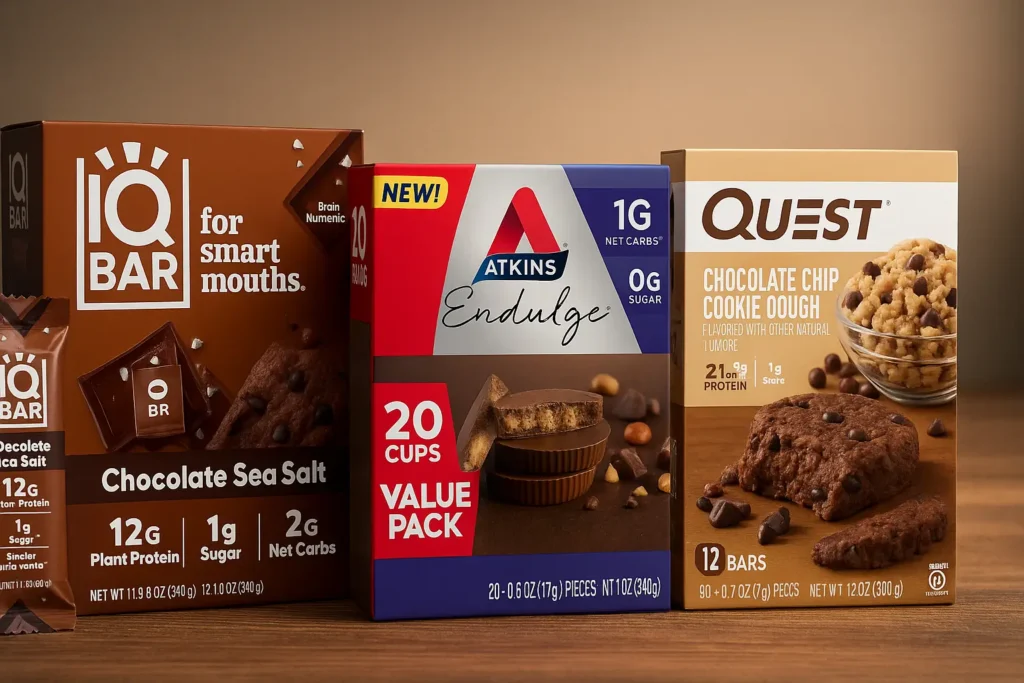
Keto Snacks to Buy: 3 Delicious Chocolate Treats Worth Trying
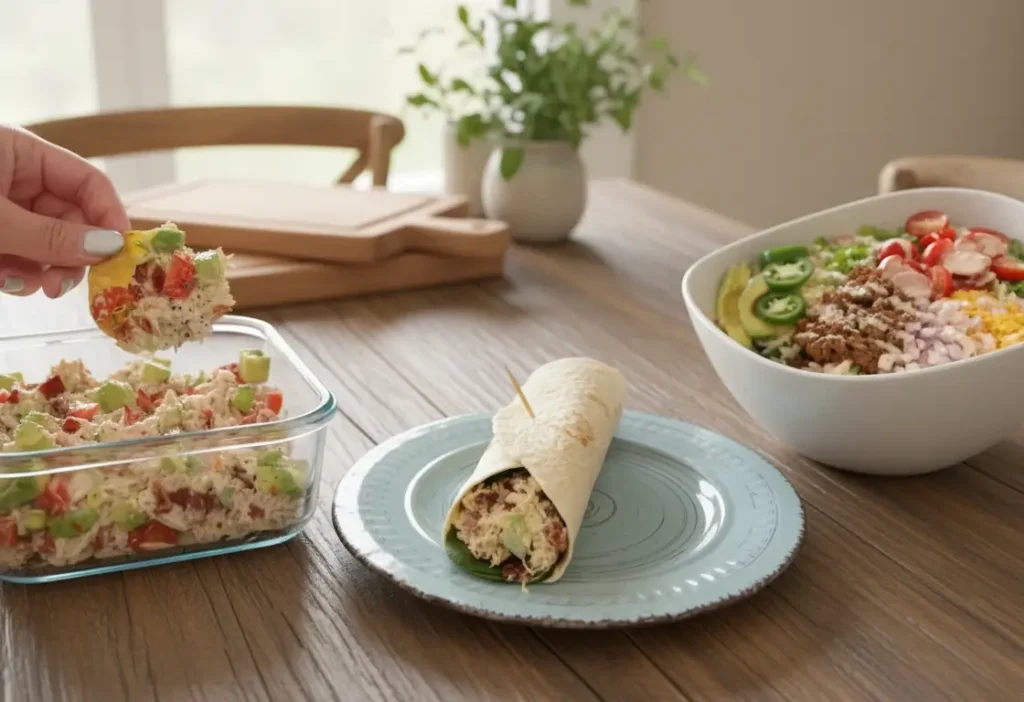
3 Keto Recipes Easy You’ll Love
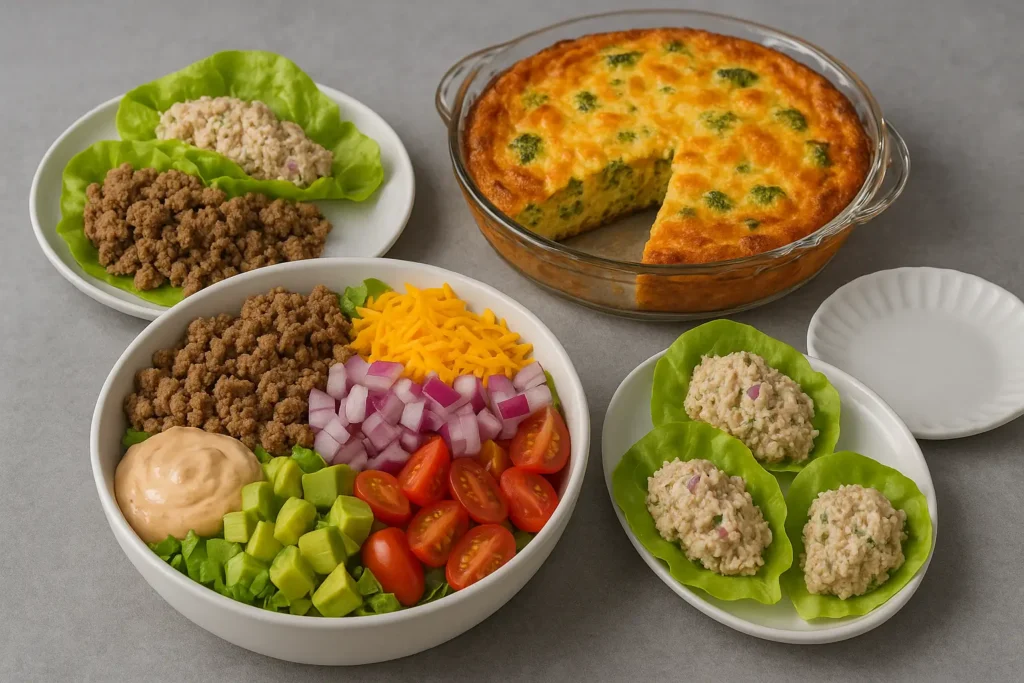
3 High Protein Low Carb Recipes You’ll Love